Showing posts with label Princess's Kitchen Dictionary. Show all posts
Wednesday, July 4, 2012
Champagne Grape
Champagne Grape is not very common in Malaysia. The super small size of this grape grabbed my attention, hence i bought it. It's a type of small (around same size as black currant), super sour, seedless grape in a bunch.
So what this small fruit is all about?
"Champagne grapes, aka Black Corinth grapes, are, in fact, the smallest variety of all seedless grapes. Black Corinth grapes are not the exclusive champagne grape, there are red and green varieties as well, though very uncommon. Corinth grapes are one of the very few Parthenocarpic type of grapes in production - Parthenocarpic grapes have absolutely no seed development at all, compared to other seedless varieties, which develop seeds and eventually the seeds naturally abort."
~ taken from Specialtyproduce.com.
"Champagne grapes are the individual pearl-sized fragile skinned fruits, aka the berries, of the seedless grape variety, Black Corinth. When eaten fresh, they are known as a table grape. In dried form the champagne grape is transformed into a raisin, in which they are known as the Zante currant, or dried currant."
~ taken from Specialtyproduce.com.
"Champagne grapes are ubiquitously utilized for garnishing champagne flutes and decorating desserts and cheese trays. The grapes can also be used in many other forms, added to pastries, such as scones, muffins and cakes. Like many other fruits, champagne grapes make a great addition to fruit cereals, granola and yogurt. They can also be cooked and reduced down into a jelly, added to sauces for savory pairings with lamb, game and pork. In dried currant form the Champagne grapes can also be added to pastries as well as couscous, rice, fruit and green salads and paired equally with aged and fresh cheeses alongside charcuterie meats."
~ taken from Specialtyproduce.com.
Now we know what to make with champagne grape, lets try with pastry, or cooking with meat, and even make cheese cake!
100gram of Champagne Grape is sold around RM6 to RM8. A small bunch of Champagne Grape is definitely more than 100gram.
Thursday, September 15, 2011
what is lemon?
Lemon is quite a common fruit used in our daily meal. But do we really realise that it's really a healthy fruit for our body besides its sour taste?

Health Benefits:
1. Lemon helps in killing bacteria.
Cooking with Lemon:
1. Lemon helps in killing bacteria.
2. Fragrance in lemon can help to remove meat's odor and improve meat texture.
3. Lemon helps in preventing heart artery problem or high blood pressure.
4. Lemon contains Citric acid, which improve digestion, and help in dissolving kidney stone.
5. Lemon contain high amount of ascorbic acid, vitamin C, vitamin B complex, other mineral such as iron, copper, and potassium, small level of vitamin A, and other anti-oxidants.
Cooking with Lemon:
1. Beverage: Ice Lemon Tea
- Red tea, Lemon, honey, mix well
2. Beverage: Honey Lemon Juice
- refer to honey lemon juice step-by-step
3. Beverage: Lemonade
4. Lemon slice can use to garnish salads, or mix little of lemon juice in salad
5. Use lemon juice in preparing seafood/fish for the nice aroma
Extra tips:
1. Mix little of lemon juice during bath, or face washing, or hair shampoo, as the natural skin care.
Monday, November 29, 2010
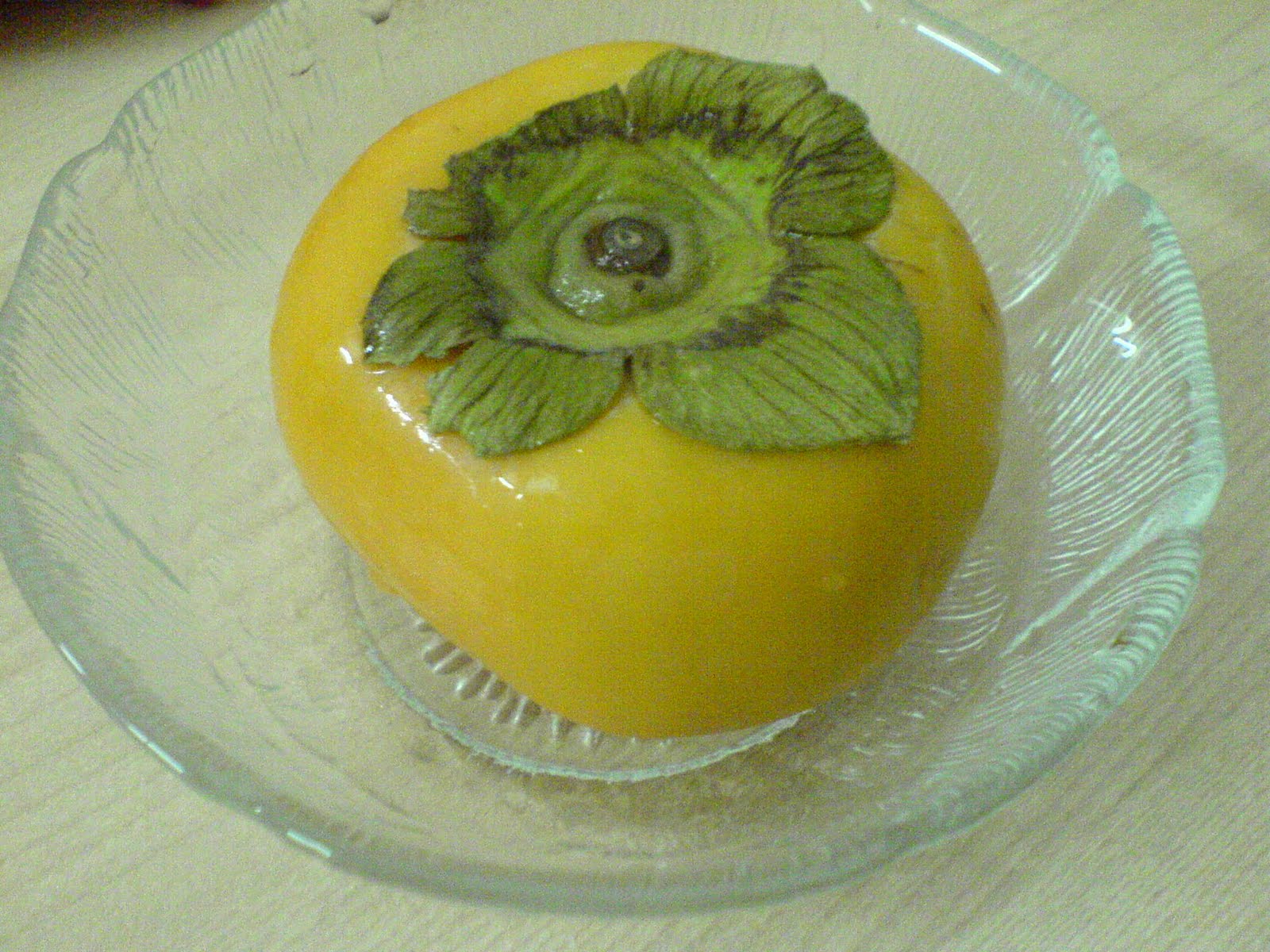
What is Persimmon?
Originally cultivated in China, Japan and Vietnam, it is known as “fruits of the gods”. In Malay, we called it as “Pisang Kaki”. Now it is the season of persimmon, until December.
Before it is fully ripened, it has a bitter, astringent taste due to high level of tannins (the same polyphenols found in tea). When ripe, it is a sweet thick pulpy jelly encased in a waxy thin skinned shell.

Health Benefits:
1. Persimmon is high in fiber, and vitamin A, carbohydrates, natural sugars, and no fat.
2. It has compounds called Shibuol and Betulinic acid, that are known to have anti-cancer properties.
3. Peel of persimmon contains phytochemicals, which may protect cells against oxidative damage associated with ageing.
Tips:
1. Avoid eating persimmon on an empty stomach, especially unripe one, as it may form gluey coagulum that causes intestinal obstruction.

Special way for delicious persimmon meals:
1. Persimmon Pancake, waffles or French toast: Add in chopped or blended persimmons for extra nutrient!
2. Persimmon Salsa: Mix chopped persimmon, tomatillo, cilantro, chilies.
3. Persimmon Salad: Mix cubed persimmon with grapes, pomegranate seeds, cubed apples and kiwi fruits.
~Courtesy from The Star Sunday Metro, on 28th November
Before it is fully ripened, it has a bitter, astringent taste due to high level of tannins (the same polyphenols found in tea). When ripe, it is a sweet thick pulpy jelly encased in a waxy thin skinned shell.
Health Benefits:
1. Persimmon is high in fiber, and vitamin A, carbohydrates, natural sugars, and no fat.
2. It has compounds called Shibuol and Betulinic acid, that are known to have anti-cancer properties.
3. Peel of persimmon contains phytochemicals, which may protect cells against oxidative damage associated with ageing.
Tips:
1. Avoid eating persimmon on an empty stomach, especially unripe one, as it may form gluey coagulum that causes intestinal obstruction.
Special way for delicious persimmon meals:
1. Persimmon Pancake, waffles or French toast: Add in chopped or blended persimmons for extra nutrient!
2. Persimmon Salsa: Mix chopped persimmon, tomatillo, cilantro, chilies.
3. Persimmon Salad: Mix cubed persimmon with grapes, pomegranate seeds, cubed apples and kiwi fruits.
~Courtesy from The Star Sunday Metro, on 28th November
Wednesday, November 24, 2010
What is Red Rice?
Red rice is different from white rice, as it contains higher Zinc and Magnesium elements, and is less common than white rice. It's similar to brown rice, but it has some differences from brown rice. Both Red and Brown rice are considered healthy rice.
In Malaysia, you can get Red rice in any hypermarket.
The red rice in China has been tested to have rich of health elements such as Zinc, Magnesium, Calcium, Phosphorus, protein, Vitamin B1, Vitamin B2, Vitamin B6 and others. The small amount of Selenium, taking in an adequate amount, is proposed as may help in prevent cancer by acting as antioxidant or by enchancing immune activity.
Red rice is proposed to have these health benefits:
1. anti-aging
2. anti-stress
3. improve iron deficiency and prevent anemia
4. improve immunity system and malnutrition
5. improve night blindness
6. Reduce fatigue and insomnia
7. May help in preventing colon cancer
So, you may want to consider replacing half portion of your normal white rice consumption with Red rice, or even start to take total Red rice in your daily meal.
Monday, November 15, 2010
What is Ginkgo?

~courtesy from en.wikipedia
Ginkgo nut/seed Culinary use:
1. It is used as a traditional Chinese food, in occasions such as wedding and Chinese New Year.
2. In Japan, it is used in dishes such as Chawanmushi, the Japanese egg custard.
Health Benefits:
1. Improve blood circulation, protect blood vessels
2. May help in curing asthma
3. Improve brain function and memory
4. Anti-aging
5. May help in preventing Alzheimer, hypertension, coronary heart disease, etc.
Precaution:
1. Overdose of Ginkgo nut/seed can cause poisoning by MPN. The possible side effects are vomiting, diarrhea, headache, etc. Hence it should be taken under a suitable portion.
2. To prevent poisoning, Ginkgo nut should be eaten when it's totally cooked.
3. The outer shell contains of chemical, which may cause allergic to skin. Hence the nut/seed should be handle with care while preparing for consumption.
Friday, October 22, 2010
What is Pomegranate?
Do you know what is Pomegranate?
courtesy from en.wikipedia.org

It is a type of fruit, can be sweet or sour. It can be eaten raw, or use in culinary.
Pomegranate Culinary use:
1. In Caucasus, it is used as juice.
2. In Azerbaijan, the juice is usually seved with fish.
3. In Turkey, the sauce made from Pomegranate is used as salad dressing, or to marinate meat.
Pomegrate Nutrition facts:
1. It contains of Vitamin C (16% of an adult daily vitamin C per 100ml serving.
2. It contains of vitamin B5.
3. It contains of high fiber (in the edible seed).
4. It contains of Punicalagins, which may have dietary value as antioxidants.
Health Benefits:
1. Reduce heart disease risk factor
2. Reduce high blood pressure
3. Inhibit viral infections
4. Maybe helpful in preventing breast cancer

It can be purchased in local wet market, or fresh food area from Jaya Jusco.
courtesy from en.wikipedia.org

It is a type of fruit, can be sweet or sour. It can be eaten raw, or use in culinary.
Pomegranate Culinary use:
1. In Caucasus, it is used as juice.
2. In Azerbaijan, the juice is usually seved with fish.
3. In Turkey, the sauce made from Pomegranate is used as salad dressing, or to marinate meat.
Pomegrate Nutrition facts:
1. It contains of Vitamin C (16% of an adult daily vitamin C per 100ml serving.
2. It contains of vitamin B5.
3. It contains of high fiber (in the edible seed).
4. It contains of Punicalagins, which may have dietary value as antioxidants.
Health Benefits:
1. Reduce heart disease risk factor
2. Reduce high blood pressure
3. Inhibit viral infections
4. Maybe helpful in preventing breast cancer
It can be purchased in local wet market, or fresh food area from Jaya Jusco.
Subscribe to:
Posts (Atom)